Science Meets the Printer: Creating Organs, Saving Lives
Discover how 3D bioprinting is turning science fiction into life-saving reality; one cell at a time.
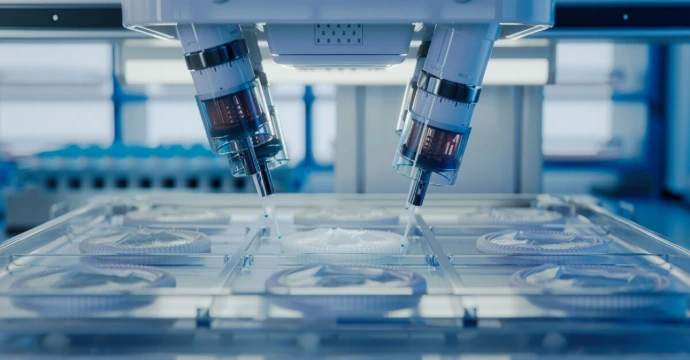
Imagine a world where waiting for an organ transplant doesn’t mean months or years of uncertainty; where doctors can simply print a new heart, kidney, or skin using your own cells. It feels like something out of science fiction, but bioprinting is making it real.
How Does It Work?
Bioprinting uses the same idea as regular 3D printing; building objects layer by layer. But instead of plastic or metal, scientists use a special “ink” made of living cells, called bio-ink. These printers follow precise digital designs to form structures like tissues, blood vessels, or even tiny organs. Once printed, the living cells grow and connect, creating something that actually functions like human tissue.
Mini Organs, Major Progress
Researchers have already printed small versions of hearts, livers, and skin in laboratories. For now, these mini-organs are used for medical research; testing drugs safely without using humans or animals. But in the future, scientists hope to print full-size organs that could be transplanted directly into patients. If successful, this could solve one of medicine’s biggest problems: the shortage of organ donors. Thousands of people die every year waiting for transplants that never come. Bioprinting could one day end that wait completely.
Challenges on the Way
Despite the excitement, there are still big challenges. Printed organs need to have working blood vessels to stay alive, and scientists are still figuring out how to make large organs that function for years. Its complex biology mixed with cutting-edge technology: a real-life science puzzle.
A Future Full of Hope
What makes this discovery so inspiring is its potential to save lives and change medicine forever. If doctors can print organs from a patient’s own cells, there will be no risk of rejection since the body will recognize it as its own. Bioprinting might not just heal people; it might redefine what’s possible in human health.
sources:
1.National Institutes of Health. “Three-Dimensional Bioprinting of Human Organs and Tissues.” Frontiers in Bioengineering and Biotechnology, 2023.
2.Royal Society of Chemistry. “Applications, Advancements, and Challenges of 3D Bioprinting in Organ Transplantation.” Biomaterials Science, 2024.
3.ScienceDirect. “Recent Progress of 3D Printed Vascularized Tissues and Organs.” Materials Today Bio, 2024.
4.PubMed Central. “Tissue Bioprinting: Promise and Challenges.” Biofabrication, 2023.