Global Science Trends - Term 2
Donia Hisham, Israa Salim & Youssef Ayman
AI: From Dream to Humanity’s Transformation
Introduction:
Artificial Intelligence (AI) is changing the way science is done around the world. It helps researchers make sense of huge amounts of data and find new patterns, speeding up discoveries in areas like medicine, climate change, and space exploration. With AI, scientists can solve difficult problems and make better predictions more quickly. As AI keeps improving, it will play an even bigger role in helping to solve some of the world's biggest challenges.
A General Breakdown of Artificial Intelligence:
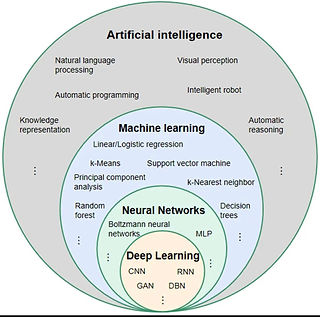
Artificial intelligence refers to the simulation of human intelligence in machines that are programmed to think and perform tasks that typically require human intelligence. It does so through the use of algorithms, data, and computational power. The concept of AI has existed since the mid-20th century, but recent progress in the digital world has driven AI’s success to new levels. AI has numerous areas which can be divided into a variety of branches. The three most important ones are machine learning, neaural networks and deep learning. Machine Learning is a form of AI where computers learn from data alone and decide without being directly programmed to make such decisions. Neural networks (which is basically like the brain but in a computer and consist of layers of artificial neurons) learn by modifying connections between neurons in response to past mistakes, exactly like how humans' function and become better with practice. Neural networks form the basis of deep learning technology. Deep Learning is a special type of machine learning that uses many layers of artificial neurons to learn complex patterns. It's how AI can recognize faces, translate languages, or even generate art. Scientists and engineers worldwide are continuously exceeding boundaries in AI, which is leading to great advancements worldwide.
Evolution and Specific Aspects of AI:
AI has immensely evolved in recent years. From simple systems to complex neural networks, the field has seen discoveries that were once thought impossible. One of the most significant advancements is the development of generative AI (a type of AI that enables machines to create images, text, and even music). AI models—like ChatGPT, AlphaGo, and DALL·E—have showcased capabilities that surpass human intelligence in certain aspects. Furthermore, Natural language processing from the name has allowed machines to understand human language and even reply to it by converting human language to computer language, processing it and then converted back to human language so we understand. These innovations are fueled complex algorithms that continuously update their processes daily. A world without artificial intelligence would be slower and less efficient. Scientific research would take longer since AI helps analyze large and maybe even unreadable datasets quickly and everyday uses like smart assistants and language translation, would disappear. Without AI, digital life would feel less intuitive, and progress in technology, medicine, and space exploration would slow down.
AI Impact on The World:
Artificial Intelligence has so many different uses in most majors; including healthcare, finance, transportation, education and so on. In healthcare Doctors implement AI in medical research or diagnosis as with training it’s possible to achieve almost perfect analysis on all symptoms and predict a disease based on these symptoms. So, in this case, engineers responsible for making the AI learn cooperate with doctors to make a doctor’s work more efficient and accurate eliminating human error from the equation. The machine speeds up drug discovery by analyzing massive datasets to identify potential compounds, reducing cost and it can also predict how a drug will react to a human body before a trial to make sure it’s safe.
As in Customer protection, AI detects fraud transactions by analyzing spending patterns and unusual behavior in real-time. As for business, AI is literally now in control of most as without it, some can’t even function; as it’s used for predictions and profit maxing, and it also shows potential opportunities businesses can go for. Furthermore, most businesses now used AI powered customer support or interactions which is beneficial and cost efficient for a business.
Of course, not all benefits come for free as a great person I don’t know the name of said “You can never gain something if you don’t sacrifice something of equal value”. AI also comes with major disadvantages. While AI brings many benefits, it also poses challenges. It can lead to job displacement as automation replaces human labor, particularly in industries like manufacturing and retail. Additionally, the increasing reliance on AI in decision-making could result in overdependence on technology, making societies vulnerable to system failures or cyberattacks. As AI continues to advance, it is crucial to address these risks to ensure that its impact is ethical and equitable.
Conclusion:
Artificial Intelligence is reshaping the world, and increasing discoveries in science, healthcare, finance, and what not. From improving medical diagnoses to optimizing business operations, AI has become an integral part of modern life. However, with these benefits come challenges, including job displacement and ethical concerns. As we continue to push the boundaries of AI, finding a balance between innovation and responsibility will be key to shaping a future where AI benefits humanity without the negatives.
Sources: -https://www.mckinsey.com/featured-insights/mckinsey-explainers/what-is-ai
-https://www.britannica.com/technology/artificial-intelligence
- https://builtin.com/artificial-intelligence/artificial-intelligence-future
-https://www.ibm.com/think/insights/impact-of-ai#:~:text=AI%2Dpowered%20business%20intelligence%20tools,as%207%25%20over%2010%20years -https://www.nexford.edu/insights/how-will-ai-affect-jobs -https://www.ibm.com/think/topics/artificial-intelligence-medicine