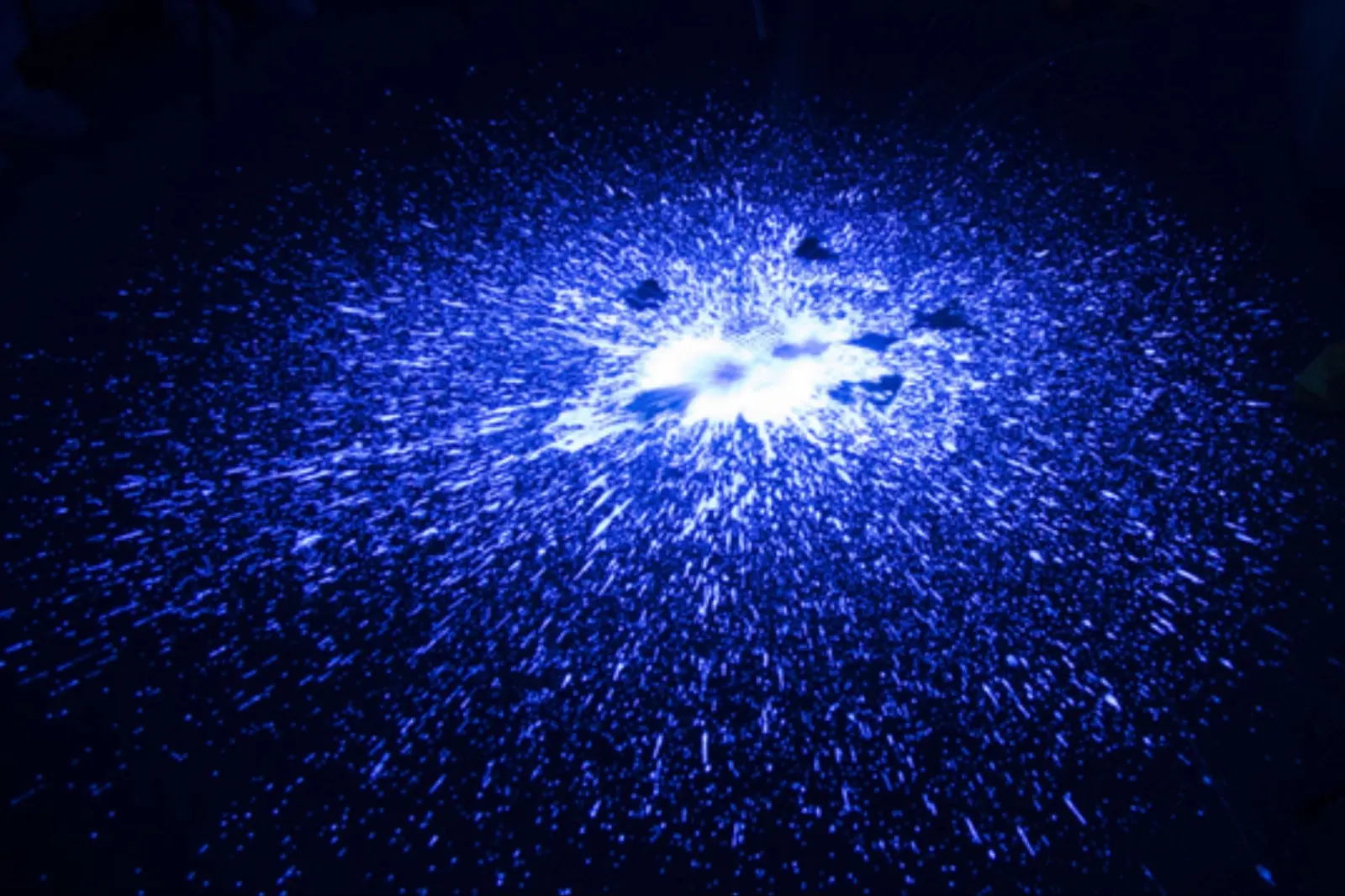
Luminol: Illuminating Hidden Blood at Crime Scene
At first glance, the crime scene appears clean, the traces of violence erased. But beneath the surface, something crucial is still hiding. Enter luminol, a chemical compound that illuminates the invisible. When sprayed in darkness, it reacts with blood, revealing faint, glowing trails of what once was. It’s the forensic tool that uncovers secrets, even in the places you think have been scrubbed clean.
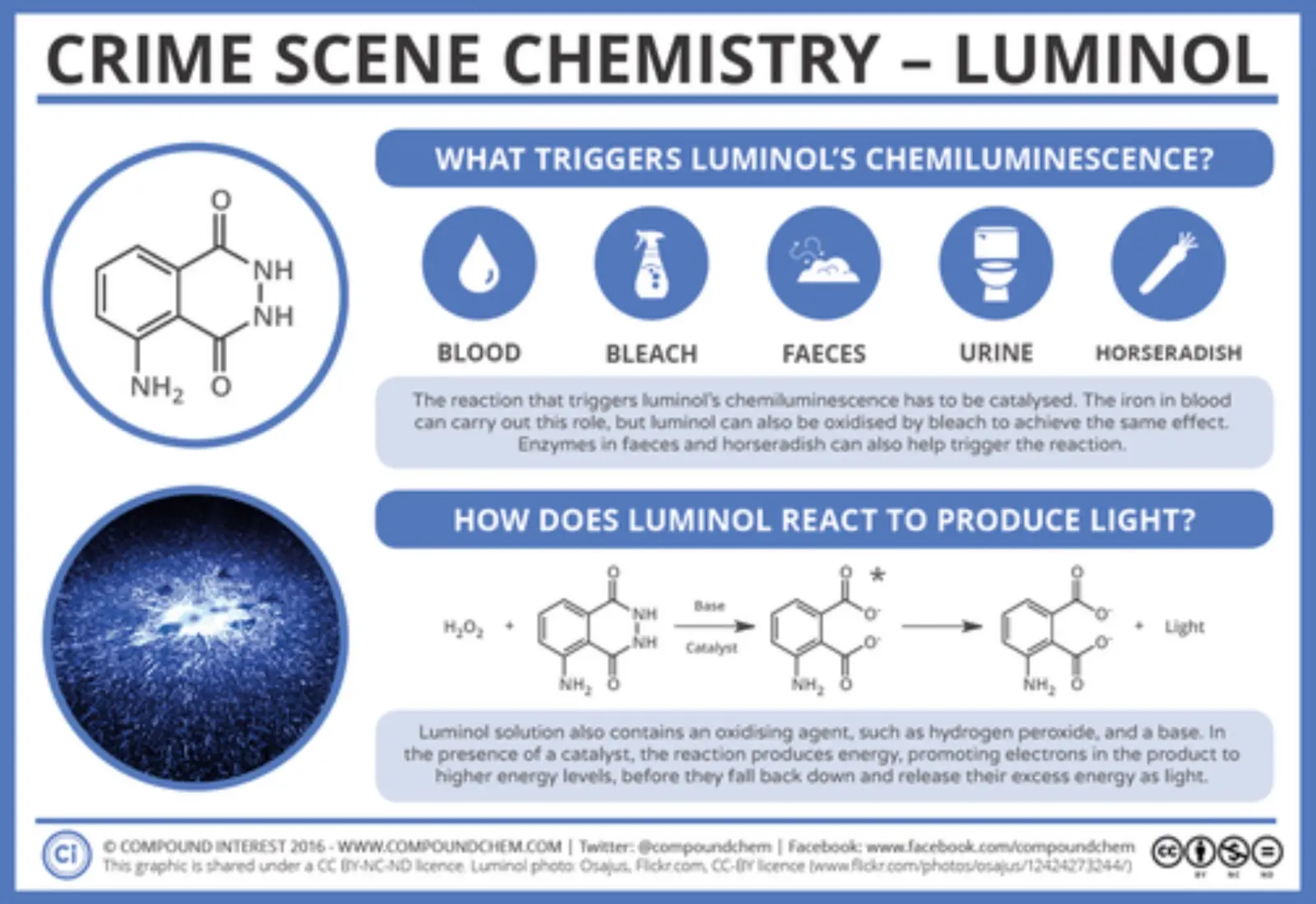
The Chemistry Behind the Glow
Luminol’s power lies in a mysterious reaction known as chemiluminescence. When mixed with hydrogen peroxide and sprayed onto surfaces, it reacts with iron in blood, producing a brief but powerful blue light. This glow reveals hidden bloodstains, making it a forensic detective’s best friend one that operates silently and quickly, fading almost as soon as it appears. Investigators must act fast, documenting the evidence before the glow vanishes into the shadows
Unveiling Hidden Evidence
At a crime scene, everything may seem tidy, the evidence scrubbed away, but luminol holds the power
to expose the hidden. As investigators move in, they darken the area and carefully spray a mixture of
luminol and hydrogen peroxide across the surfaces. Within moments, areas once thought clean begin
to glow with a faint, eerie blue light. Bloodstains hidden beneath layers of cleaning supplies, wiped
down with cloths, or even disguised under furniture suddenly emerge, revealing a trail. The blue glow
may show blood spattered on walls, footprints leading to a concealed location, or traces of a struggle
that had been erased.
This Luminol’s glow doesn’t just reveal where blood has been, it reveals the path of a crime, often
illuminating hidden details that may completely change the investigation. But time is critical. The glow
fades quickly, so investigators must photograph and document everything before it vanishes into the
shadows. Luminol can show the truth, but it can’t answer every question. For that, further testing is
necessary to determine whose blood it is or when it was spilled, but it provides the first crucial clues in
uncovering a hidden crime scene story.
evidence scrubbed away, but luminol holds the power
to expose the hidden. As investigators move in, they darken the area and carefully spray a mixture of
luminol and hydrogen peroxide across the surfaces. Within moments, areas once thought clean begin
to glow with a faint, eerie blue light. Bloodstains hidden beneath layers of cleaning supplies, wiped
down with cloths, or even disguised under furniture suddenly emerge, revealing a trail. The blue glow
may show blood spattered on walls, footprints leading to a concealed location, or traces of a struggle
that had been erased.
This Luminol’s glow doesn’t just reveal where blood has been, it reveals the path of a crime, often
illuminating hidden details that may completely change the investigation. But time is critical. The glow
fades quickly, so investigators must photograph and document everything before it vanishes into the
shadows. Luminol can show the truth, but it can’t answer every question. For that, further testing is
necessary to determine whose blood it is or when it was spilled, but it provides the first crucial clues in
uncovering a hidden crime scene story.
The History Behind the Glow
Luminol’s path to forensic fame started with a curious observation in 1928 by H.O. Albrecht, a chemist who noticed blood made it glow brighter. However, it wasn’t until Walter Specht refined its use in the 1930s that luminol became an indispensable tool for investigators. Its ability to reveal hidden bloodstains was nothing short of revolutionary.
Today, it’s still one of the most crucial tools in the forensic toolkit, enabling detectives to uncover the truth when all seems lost.
The Shadows of Limitation
But luminol is not infallible. It can detect blood even if it’s been diluted to one part per million, but it’s not blood-specific. It reacts with other substances too like bleach, copper, even some plant enzymes. A false positive could send investigators down the wrong path. And so, DNA testing becomes the final piece of the puzzle, confirming that the blood belongs to the victim or the perpetrator, solving the mystery once and for all.
Conclusion
Luminol’s glowing blue light may fade quickly, but the clues it reveals remain etched in the investigation. It’s a silent witness, uncovering the hidden truth in places the human eye can’t see, exposing the darkness that once concealed the crime. For forensic investigators, luminol isn’t just a tool, it’s a key to unlocking secrets that would otherwise remain buried.
Sources:
Wikipedia – Luminol: https://en.wikipedia.org/wiki/Luminol Britannica – Luminol chemistry: https://www.britannica.com/science/luminol HowStuffWorks – How luminol works in forensics: https://science.howstuffworks.com/luminol.htm
By : Sawsan Saleh