Science in the UAE - Term 2
Bader Ayman, Mutaz, Marwa Mohammed & Israa Salim
Khalifa University Launches Groundbreaking Marine Robotics Lab in Partnership with Stanford University to Combat Ocean Pollution
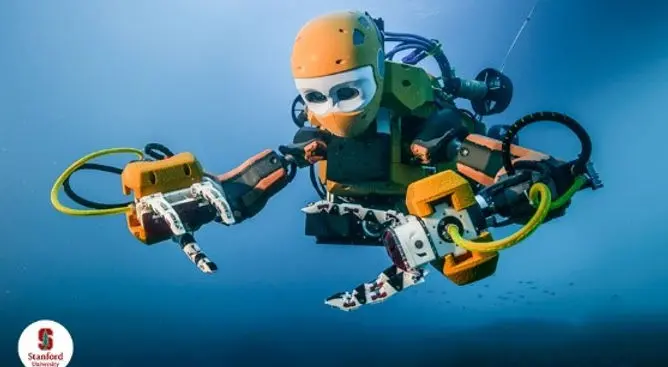
Have you ever wondered how scientists explore the ocean’s depths without diving in themselves? Khalifa University, in partnership with Stanford University, has taken a groundbreaking step in marine research with the launch of the region’s first advanced Marine Studies and Research Lab. Designed to push the boundaries of ocean monitoring and deep-sea exploration, the lab features cutting-edge wave and stream simulation technology. Researchers are using this facility to develop robotic systems that can navigate underwater environments, clean marine ecosystems, and uncover the secrets hidden beneath the waves. With innovations like Stanford’s OceanOneK robot successfully retrieving plastic waste, this lab is set to redefine the future of marine science.
With its advanced simulation technology, the lab is transforming the way underwater robots are developed and tested. Conducting deep-sea trials is often expensive, time-consuming, and dependent on unpredictable weather conditions. However, this facility addresses those challenges by replicating real oceanic environments within a controlled setting. Researchers can recreate powerful currents, shifting temperatures, and deep-sea pressures to assess how robotic systems perform in extreme conditions. These controlled experiments help enhance robotic navigation, optimize battery life, and ensure reliable operation in demanding environments such as coral reefs and sunken shipwrecks.
Additionally, the facility is pushing the boundaries of AI-driven underwater technology for ocean conservation. Some robotic systems monitor marine life and track endangered species, while others focus on coral reef restoration and removing pollutants from the ocean floor. By perfecting these technologies before they are deployed in real-world conditions, the lab is accelerating advancements in autonomous systems that could reshape marine exploration and preservation. With successful projects like Stanford’s OceanOneK already demonstrating the potential of underwater robotics, this facility is laying the groundwork for a future where artificial intelligence and automation play a crucial role in safeguarding marine ecosystems.
In conclusion, the inauguration of the Khalifa University Marine Studies and Research Lab marks a pivotal moment in the quest for sustainable solutions to the growing challenges of ocean pollution. With its state-of-the-art technology and strategic collaboration with Stanford University, the lab is poised to become a global leader in marine robotics innovation. By combining cutting-edge research with a shared commitment to preserving marine ecosystems, this groundbreaking initiative offers hope for a cleaner, healthier future for our oceans. As the UAE takes a leading role in advancing ocean conservation, the Khalifa University Marine Studies and Research Lab serves as a testament to the power of innovation, collaboration, and sustainability in addressing one of the world’s most pressing environmental issues.